

























School Nurse in Florida with an ASN
Pursue a career as a school nurse in Florida with FVI’s ASN nursing program. Get hands-on clinical training, NCLEX-RN prep, and personalized support from day one.
Campus Location
Miami, Miramar
Time to Complete
22 months
Degree Awarded
Associate of Science
Start Your Path to Working as a School Nurse with an ASN
FVI’s ACEN accredited 22-month Associate of Science in Nursing program can help prepare you to pursue RN licensure and work toward a career as a school nurse. Students receive classroom instruction, simulation practice, skills training, clinical experience, and NCLEX-RN preparation.
After graduating, you are eligible to take the NCLEX-RN. Once you pass and meet Florida licensing requirements, you can pursue school nurse positions. Hiring requirements vary by employer.
Nursing Education
Receive instruction in patient care, pharmacology, nursing concepts, health promotion, and care across the lifespan.
Clinical Judgment
Practice interpreting patient data, identifying changes in condition, and making informed nursing-care decisions.
NCLEX-RN Preparation
Build exam readiness through nursing instruction, practice questions, clinical judgment exercises, and student support.
Success Coaching
Access personalized support, tutoring, mentoring, and help staying on track throughout the program.
ACEN Accreditation
The nursing program at Miami and Miramar is accredited by the Accreditation Commission for Education in Nursing.
Skills and Simulation Labs
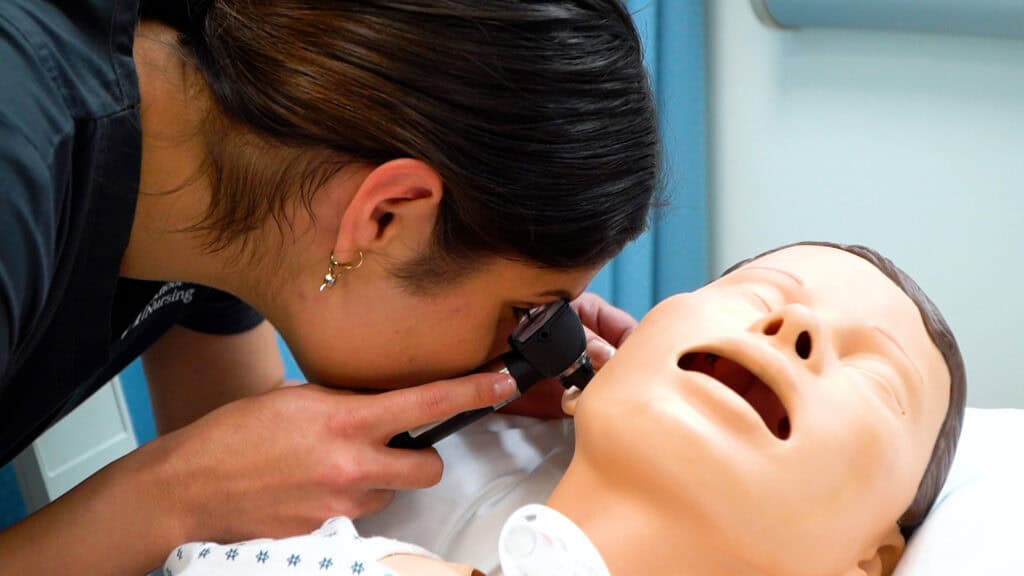
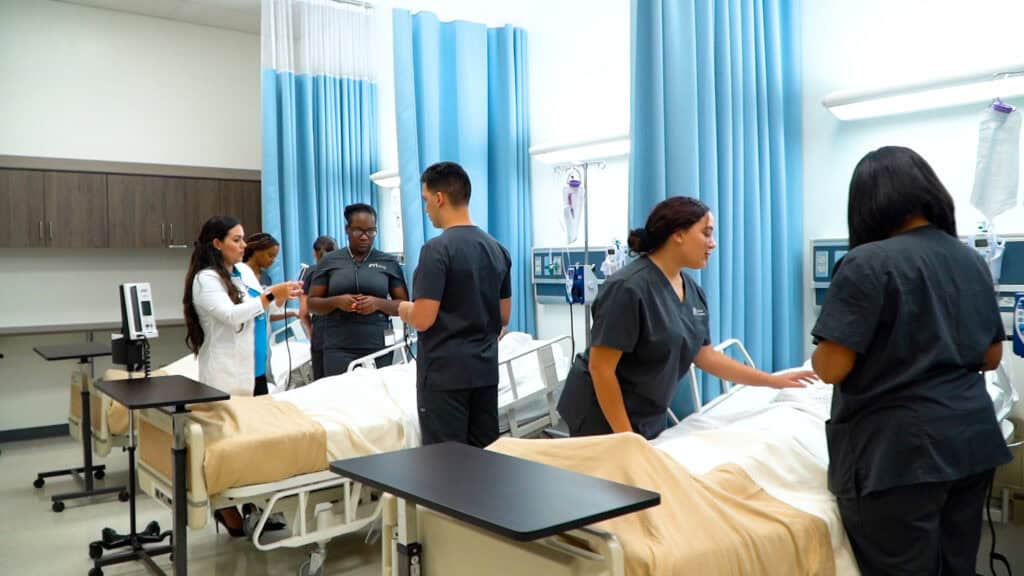
Practice nursing procedures and decision-making through hands-on activities and realistic patient-care scenarios.
Faculty Support
Receive instruction and guidance from nursing faculty with clinical experience.
What Does a School Nurse Do?
A school nurse provides direct healthcare to students in a K-12 setting. The role combines clinical skills with health education, chronic condition management, and emergency response.
01
Assessing students who are sick or injured
02
Administering medications and treatments during the school day
03
Managing chronic conditions such as asthma, diabetes, and severe allergies
04
Responding to medical emergencies on campus
05
Performing health screenings (vision, hearing, height and weight)
06
Creating individualized healthcare plans for students with ongoing needs
07
Communicating with parents, teachers, and healthcare providers
08
Maintaining student health records
09
Educating students and staff on health and safety topics
10
Following school district health policies and state regulations
Specific duties depend on the school district, grade level, student population, and employer policies.
What Is It Like to Work as a School Nurse?
School nurses often serve as the only healthcare professional in the building, so the role requires independence, organization, and sound judgment. A typical day may include medication administration, health screenings, walk-in visits, and providing care for injuries or sudden illness. The role also involves regular communication with families and school staff to coordinate student care.
Many positions follow a school-year calendar, which may include summers and school breaks off. The role may appeal to nurses who value autonomy, a more predictable schedule, and ongoing relationships with students and families.
Where Can a School Nurse in Florida Work?
School nurses work in educational settings across the state. Possible workplaces include:
- Public elementary, middle, and high schools
- Private and independent schools
- Charter schools
- Pre-K and early childhood education centers
- Colleges and universities
- School-based health clinics
Available positions and qualifications vary by school district and employer.
School Nurse Salary and Job Outlook in Florida
A career as a school nurse is one of many paths available to licensed RNs in Florida. Demand for Registered Nurses across the state is strong and expected to keep growing. That means more job options for RNs in the years ahead.
Important: FVI’s ASN program prepares graduates for entry-level nursing positions. Entry-level wages are typically below the national median. Salary outcomes vary based on employer, location, experience, and other factors.
Statewide, the need for Registered Nurses is expected to stay strong. According to the Florida Center for Nursing, RN demand across the state is on track to grow by about 26% from 2022 to 2037.
For prospective students, these numbers point to continued opportunities across many workplace settings, including schools and education.
According to the U.S. Bureau of Labor Statistics:
- The median annual wage for Registered Nurses was $93,600 in May 2024
- RNs working in educational services earned a median of $74,360
- RN employment is projected to grow 5% from 2024 to 2034
- About 189,100 RN job openings are projected nationwide each year, on average, during that period
Salary figures are for Registered Nurses generally and are not specific to school nurse positions. Employment and earnings are not guaranteed.
Source: Bureau of Labor Statistics, U.S. Department of Labor, Occupational Outlook Handbook, Registered Nurses
Is Working as a School Nurse Right for You?
Working as a school nurse takes patience, clinical skill, and the ability to work independently with children and families.
The role may be a good fit if you:
- Want to care for children and adolescents
- Communicate well with students, parents, and school staff
- Value a consistent, school-year schedule
- Are organized and can manage the needs of many students throughout the day
- Want to combine patient care with health education
- Are comfortable making clinical decisions on your own
If this sounds like you, an ASN degree is a practical place to start. It gives you the education and clinical experience to pursue RN licensure and begin building toward a career as a school nurse.
How FVI Prepares You for a Career as a Medical-Surgical Nurse
FVI’s ASN program combines classroom instruction with skills labs, simulation, and supervised clinical experiences. Students build the clinical knowledge and judgment used across healthcare settings, including schools.
Students receive instruction and practice in areas relevant to working as a school nurse, such as:
Patient Assessment
Evaluate patients, identify changes in their condition, and communicate findings to families and care teams.
Clinical Judgment
Prioritize patient needs and determine when a situation requires immediate action.
Medication Administration
Prepare and administer medications safely, including IV therapy and dosage calculations.
Pediatric and Lifespan Care
Provide age-appropriate care to patients at different stages of development, from young children to adolescents.
Documentation
Maintain accurate health records and care plans.
Communication
Explain health information clearly to patients, families, school staff, and other members of the care team.
Professionalism
Provide compassionate, ethical care while maintaining patient privacy and safety.
Emergency Response
Recognize and respond to urgent health events.
FVI’s nursing faculty includes instructors with professional backgrounds in pediatric, emergency, medical-surgical, and specialty care settings. Beyond the classroom, students have access to Success Coaches, tutoring, and career services support to help them stay on track and prepare for the transition into professional practice.
NCLEX-RN preparation is integrated throughout the curriculum, following the NCSBN NCLEX-RN Blueprint.
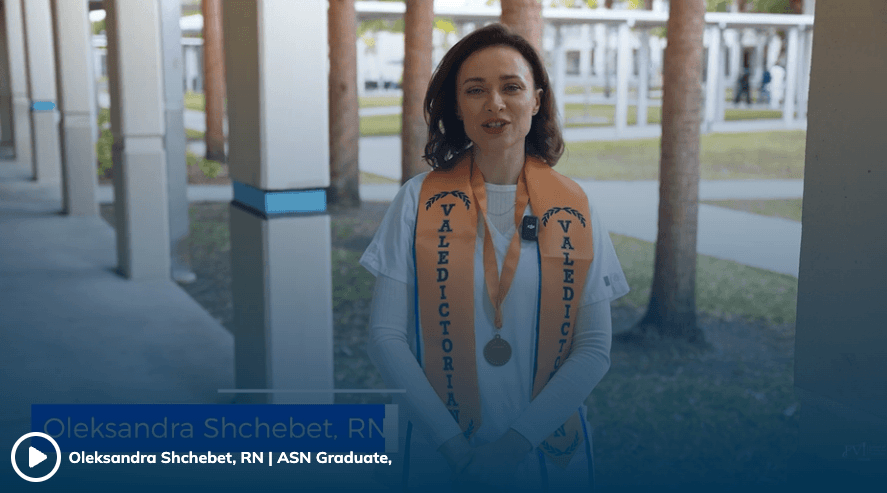
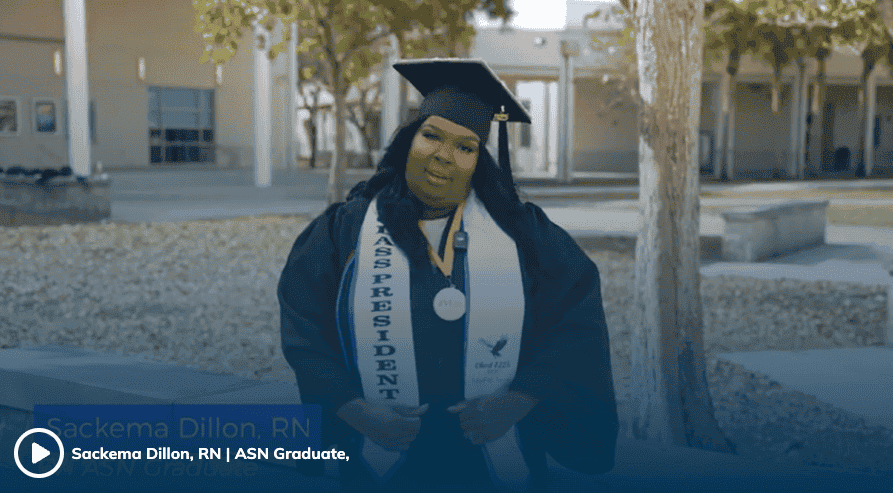
Hear From Our Nursing Students
Ready to start your journey at FVI?
Accreditations and Partnerships
The Associate of Science in Nursing programs at FVI’s Miami and Miramar campuses are accredited by the Accreditation Commission for Education in Nursing (ACEN). FVI School of Nursing and Technology is institutionally accredited by the Accrediting Commission of Career Schools and Colleges (ACCSC).
Get More Information Today!
Real-World Nursing Training for Medical-Surgical Care
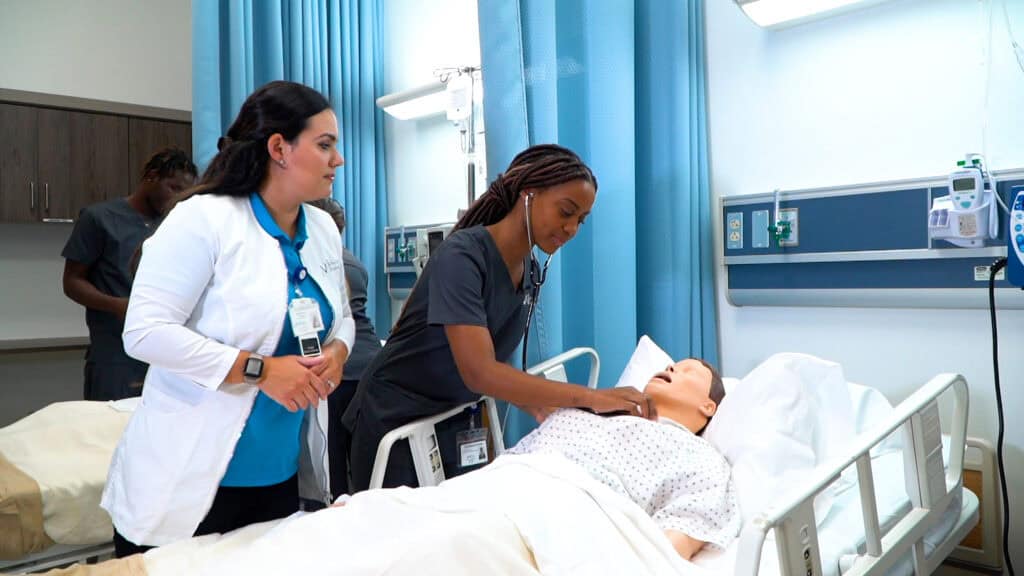
FVI’s ASN program includes hands-on training designed to help students connect classroom instruction with nursing care in clinical environments.
Simulation
Work through realistic patient-care scenarios that build confidence, clinical judgment, communication, and the ability to respond when conditions change.
Skills Labs
Practice core nursing procedures in a controlled setting, including patient assessment, medication administration, infection control, and safe patient care.
Off-Site Clinical Rotations
Complete supervised clinical rotations in professional healthcare settings, providing care to real patients alongside experienced teams at Pediatrics Associates, Memorial Healthcare System, HCA Florida, Holy Cross Hospital, and other partner facilities.
Clinical sites and assignments vary. School nurse placement during the program is not guaranteed. The training provides a broader nursing foundation that may support future practice as a school nurse or in other healthcare settings.
How to Become a Medical-Surgical Nurse in Florida
01
Complete a Nursing Degree
Begin by earning an Associate of Science in Nursing or a Bachelor of Science in Nursing degree. FVI’s 22-month ASN nursing program combines classroom instruction, skills and simulation labs, and supervised clinical experience to prepare students for the NCLEX-RN.
02
Pass the NCLEX-RN and Earn Your Florida RN License
After graduating, you are eligible to take the NCLEX-RN, the national licensure exam for Registered Nurses. FVI’s ASN program includes NCLEX-RN preparation throughout the curriculum to help students build exam readiness.
Licensure requires passing the exam and meeting Florida Board of Nursing requirements. Completing a degree program alone does not provide RN licensure.
03
Review Employer Requirements
Schools and districts may have different requirements, such as:
- Background screening
- CPR or Basic Life Support certification
- Experience caring for children
- Previous clinical experience
- Additional training or credentials
04
Apply for School Nurse Positions
Search for school nurse jobs in Florida that match your qualifications and interests. Some employers may consider newly licensed RNs. Others may prefer prior experience in pediatric, emergency, community, or public-health settings. Hiring requirements vary by school district and employer. Earning an ASN and obtaining RN licensure do not guarantee placement in a school nurse position.
05
Continue Building Your Qualifications
Once hired, you may complete employer-provided orientation or training. Some school nurses pursue the National Certified School Nurse (NCSN) credential or other professional development over time.
Ready to Get Started?
Study Nursing in Miami or Miramar
FVI offers its 22-month Associate of Science in Nursing program at two South Florida campuses.
Miami Campus
FVI’s 25,839-square-foot Miami nursing school campus is located at Midway Crossing Mall on West Flagler Street in Miami, serving students in Miami-Dade County and surrounding communities.
Miramar Campus
FVI’s 29,984-square-foot Miramar nursing school campus is located on Enterprise Way, serving students in Broward County and surrounding communities.
Take the Next Step Toward a Career as a Registered Nurse
FVI’s 22-month ASN program prepares you with the coursework, clinical experience, and NCLEX-RN preparation to pursue a career as a Registered Nurse in Florida. Graduates are prepared for entry-level RN positions in hospitals, clinics, schools, and other healthcare settings. Financial aid may be available to those who qualify.
Graduation does not guarantee employment or licensure. RN licensure requires passing the NCLEX-RN and meeting Florida Board of Nursing requirements.
Frequently Asked Questions
Can you work as a school nurse with an ASN?
Yes. A Registered Nurse who has earned an ASN may pursue school nurse positions. You must first graduate, pass the NCLEX-RN, and meet Florida Board of Nursing requirements to obtain your RN license. From there, you can apply for school nurse jobs in Florida. Hiring requirements vary by school district and employer.
Do school nurses in Florida need to be Registered Nurses?
Requirements vary by school and employer. Many school nurse positions require an active RN license. Applicants should review each job description and district policy carefully.
What does a school nurse do during a typical day?
A school nurse handles a mix of planned and unplanned tasks. That can include administering medications at set times, conducting scheduled health screenings, caring for students who feel sick or get hurt, updating health records, and speaking with parents about student health needs. The work follows a routine shaped by the school schedule, but each day brings different situations.
Exact responsibilities vary by school, grade level, and employer policies.
What skills does a school nurse need?
Key skills include:
- Patient assessment: recognizing signs and symptoms in children and adolescents
- Medication management: safely administering and tracking medications
- Emergency response: acting quickly during allergic reactions, injuries, or other urgent events
- Communication: explaining health information to students, families, and school staff
- Organization: managing health records, care plans, and screenings for many students
- Independent judgment: making clinical decisions without another nurse on site
These skills develop through nursing education, clinical training, and on-the-job experience.
What skills does a medical-surgical nurse need?
Medical-surgical nurses need skills that help them manage several patients with different care needs at the same time:
- Prioritization: Decide which patient needs attention first as conditions and care plans change.
- Time management: Keep medications, treatments, assessments, and discharges moving on schedule.
- Clinical judgment: Recognize when a patient is improving, declining, or developing a complication.
- Postoperative monitoring: Watch for pain, bleeding, infection, and other changes during recovery.
- Discharge planning: Prepare patients and families to continue care safely after leaving the hospital.
- Care coordination: Keep physicians, therapists, nursing staff, and other team members aligned on each patient’s plan.
Where can school nurses work besides public schools?
School nurses may also work in private schools, charter schools, colleges, universities, preschool programs, residential schools, and community programs.
How long is FVI's ASN program?
FVI’s Associate of Science in Nursing program is designed to be completed in 22 months. Completion time may vary based on transfer credits, academic progress, scheduling, and other individual circumstances.
Does FVI prepare students for the NCLEX-RN?
FVI’s ASN curriculum includes structured NCLEX-RN preparation, clinical judgment exercises, nursing instruction, tutoring, and student support. The program is designed to prepare qualified graduates to take the NCLEX-RN. FVI cannot guarantee that a graduate will pass the examination or receive licensure.
Is being a school nurse an entry-level RN career?
It can be, depending on the employer. Some school districts hire newly licensed Registered Nurses, while others prefer candidates with prior clinical experience. Review each position’s requirements when applying for school nurse jobs in Florida.
How do I apply to nursing school today?
FVI offers rolling admissions with multiple start dates throughout the year, making it easy to begin when you’re ready. Our admissions team is here to walk you through every step—from application to enrollment. To apply, simply contact an FVI Admissions Specialist who will help determine your eligibility and guide you into the program that’s right for you.
Prospective ASN Nursing Student Resources
Becoming a Nurse
- What Is the Shortest Path to Becoming a Nurse?
- How Long Does it Take to Become an RN in Florida?
- Can I Become a Nurse If I Already Have a Degree?
- Switching Careers to Nursing: What You Need to Know
- Nursing Program for Foreign Medical Graduates & Physicians – ADN Program
- Can You Do Nursing School While Working Full Time?