Medical assistants are in high demand across the country, and the settings where they work are incredibly varied. From busy physician offices to specialty clinics and hospitals, MAs play an important role in keeping healthcare facilities running smoothly.
According to the Bureau of Labor Statistics (BLS), employment of medical assistants is projected to grow 12% from now through 2034, which is much faster than the average for all occupations. About 112,300 openings for medical assistants are projected each year. In Florida, the need is especially strong, with growing demand for allied health professionals statewide and South Florida’s expanding healthcare industry creating consistent opportunities for trained medical assistants. These numbers point to a career with the potential for real stability.
So where exactly do medical assistants work, and what does the job look like day to day? This guide covers the role itself, the qualifications you’ll need, the range of healthcare settings where MAs are employed, and what the job market looks like in Florida and Miami.
What Is a Medical Assistant?
Medical assistants are allied health professionals who support physicians, physician assistants, nurse practitioners, and other healthcare providers. They work on both the clinical and administrative sides of a medical practice, which makes them valuable in nearly any healthcare environment.
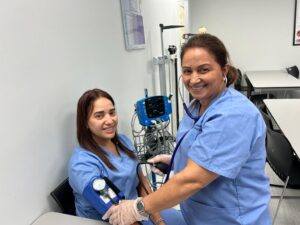
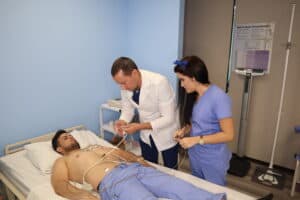
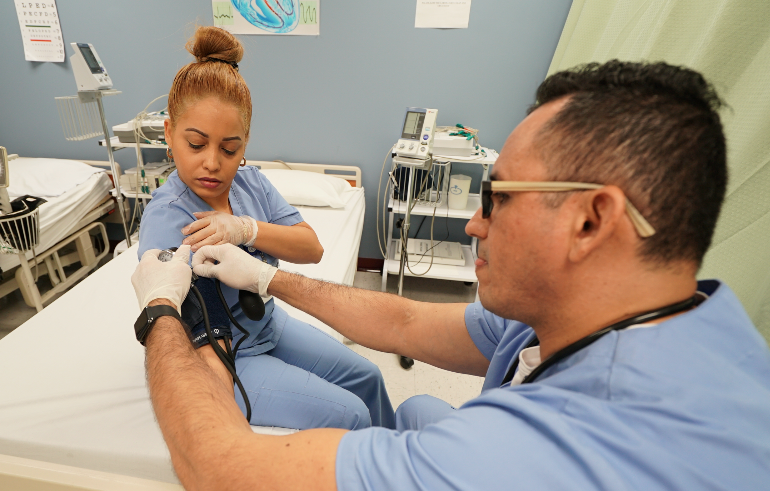
On the clinical side, medical assistants may take patients’ vital signs, prepare patients for examinations, assist with minor procedures, draw blood, perform EKGs, administer medications, and collect lab specimens.
On the administrative side, they often handle tasks like scheduling appointments, managing patient records, processing insurance claims, handling patient intake, and working within Electronic Health Records (EHR) systems.
Because the role covers such a wide range of responsibilities, medical assistants tend to develop a well-rounded skill set that translates across many types of workplaces. Whether you’re drawn to patient interaction, behind-the-scenes coordination, or a mix of both, medical assisting offers that flexibility.
What Qualifications Do You Need to Become a Medical Assistant?
Requirements for medical assistant positions can vary from employer to employer, so it’s always a good idea to look carefully at the specific job you’re interested in. That said, many employers prefer—or require—candidates who have completed a formal training program.
Completing an accredited medical assistant program gives you structured training in both the clinical and administrative sides of the job, which can make a real difference when applying for positions. Graduates of FVI’s Medical Assistant program are eligible to sit for nationally recognized certification exams, such as the Nationally Registered Certified Medical Assistant (NRCMA) exam. Earning a certification can strengthen your resume and show employers that you’ve met a recognized standard of knowledge and skill.
Beyond specific credentials, employers typically look for candidates who are organized, detail-oriented, and comfortable communicating with patients and healthcare providers. Strong computer skills—especially familiarity with EHR systems—are also increasingly valued. If you’re someone who enjoys working with people and staying busy throughout the day, the medical assistant role may be a natural fit.
Where Do Most Medical Assistants Work?
One of the appealing aspects of a medical assistant career is the range of healthcare settings where you can work. Here’s a closer look at the most common environments.
Physician Offices and Medical Clinics
This is the most common workplace for medical assistants. In a physician’s office or outpatient clinic, MAs are often the first point of contact for patients. A typical day might include checking patients in, recording vital signs, assisting the provider during exams, updating medical records, and managing appointment schedules.
Working in this setting often means building long-term relationships with patients, especially in family medicine or internal medicine practices where patients return regularly. For MAs who enjoy getting to know patients over time, this can be a rewarding environment.
Hospitals and Outpatient Care Centers
Medical assistants who work in hospital outpatient departments or ambulatory care centers tend to experience a faster pace. These settings handle higher patient volumes and a wider range of conditions, which means more variety in your daily tasks.
In a hospital outpatient setting, you might assist with pre-operative preparation, help coordinate patient flow between departments, or support physicians across multiple specialties. Outpatient surgical centers, diagnostic labs, and rehabilitation facilities also employ medical assistants in clinical and administrative roles.
Specialty Clinics
Many medical assistants work in practices that focus on a specific area of medicine, such as dermatology, cardiology, orthopedics, pediatrics, OB/GYN, or gastroenterology. In these settings, MAs often develop specialized skills related to the practice’s focus.
For example, a medical assistant working in a cardiology office may perform EKGs regularly, while an MA in a dermatology practice might assist with skin biopsies or wound care. Specialty clinics can be a great option if you discover a particular area of healthcare that interests you.
Urgent Care Centers
Urgent care facilities have expanded significantly in recent years, and they represent a growing employment setting for medical assistants. These centers handle walk-in patients with conditions that need attention quickly, such as minor injuries, infections, and flu symptoms. MAs play a key role in patient intake, triage support, and clinical assistance.
The pace in urgent care tends to be quick, and no two days are exactly the same. If you prefer variety and a fast-moving environment, urgent care can be a good fit.
Additional Settings
Medical assistants also work in community health centers, public health departments, chiropractic offices, podiatry practices, insurance companies, and corporate wellness programs. Some MAs support telehealth services by managing virtual appointment logistics and patient communications.
As healthcare continues to evolve, new settings for medical assistants continue to emerge.
Medical Assistant Jobs in Florida and Miami
Florida’s healthcare industry continues to expand, driven by population growth, a large senior population, and increasing demand for outpatient and preventive care services. For medical assistants, that expansion translates into consistent opportunity—especially in South Florida.
According to the BLS, medical assistant employment nationally is projected to grow by 12% from 2024 to 2034. The median annual wage for medical assistants was $44,200 in May 2024. (Note: This figure represents the national median and is not an entry-level salary. Actual wages vary by location, experience, employer, and other factors. Visit www.bls.gov for the most current data.)
At the state level, the Florida Center for Nursing’s 2022–2037 Workforce Projections Report shows continued growth in demand for allied health roles across the state, with South and Southeast Florida projected to experience the greatest need. Miami-Dade, Broward, and Palm Beach counties are all areas where healthcare facilities are expanding and hiring.
Healthcare job postings in Florida requiring bilingual skills have also increased by over 200% in recent years, according to the American Immigration Council. This is especially relevant for South Florida’s diverse, multilingual communities.
FVI School of Nursing and Technology has partnerships with healthcare employers across South Florida, including Holy Cross, Pediatrics Associates, and Memorial Health. Students perform their externship at facilities like these, gaining hands-on experience in real clinical environments.
How FVI Prepares You to Work in Any Setting
FVI School of Nursing and Technology offers a Medical Assistant Program in Florida designed to prepare students for entry-level medical assistant positions in physician practices and other outpatient care settings. The program is 36 instructional weeks (approximately 9 months, including externship) and leads to a diploma.
The curriculum covers the full scope of medical assisting, both clinical and administrative. Coursework includes:
- Anatomy and physiology
- Pharmacology
- Phlebotomy
- EKG
- Patient preparation and clinical procedures
- Medical office administration
- Medical insurance, billing, and coding
- Introduction to X-ray and diagnostic imaging
- Professional career development
Students also earn CPR/BLS certification and complete in-service training in OSHA, HIPAA, infection control, and other key areas.
Hands-On Externship
A 180-hour externship is built into the program, giving students supervised, hands-on experience in a real medical office. During the externship, students practice skills in patient examination, vital signs, phlebotomy, EKG, office procedures, and administrative duties. Many students find that the externship experience gives them a clearer sense of the type of healthcare setting where they’d like to work.
Certification Exam Eligibility
Graduates of the program may be eligible to sit for nationally recognized certification exams, including:
- Nationally Registered Certified Medical Assistant (NRCMA)
- Nationally Registered Certified EKG Technician (NRCEKG)
- Nationally Registered Certified Phlebotomy Technician (NRCPT)
Schedule and Locations
The program is available at FVI’s Medical Assistant school in Miami (bilingual English/Spanish) and Medical Assistant school in Miramar (English). Classes run Monday through Thursday, with both day sessions (8:30 AM – 1:30 PM) and evening sessions (5:30 PM – 10:30 PM), so students can choose a schedule that fits their busy lives.
Personalized Support
FVI’s approach to education is personalized. Faculty and staff work closely with each student throughout the program, from enrollment through graduation. Career Services support is available to help with resume preparation, interview skills, and more. Financial aid is available to those who qualify.
If you’re ready to learn more about becoming a medical assistant in South Florida, contact us to speak with an admissions advisor and find out how to get started.
Graduation does not guarantee employment or licensure. Salary data sourced from the Bureau of Labor Statistics (BLS) represents median figures and is not representative of entry-level salaries that graduates may expect. See the Consumer Information page for the most current tuition and fee details.