

Artificial intelligence is showing up in more clinics and hospitals, raising the question: Are medical assistants being phased out? The short answer, based on current labor data, is an emphatic no. The U.S. Bureau of Labor Statistics (BLS) still projects employment for medical assistants to grow 12% from 2024 to 2034, much faster than the average for all occupations. That adds about 101,200 new jobs nationwide, with roughly 112,300 openings each year from growth and people leaving the field.
These BLS numbers already take emerging technologies, including AI and automation, into account. The agency assumes tech changes happen gradually and reshape jobs rather than wipe them out overnight. Early signs point to AI becoming a useful tool that helps medical assistants work more efficiently while keeping human staff at the center of patient care.
Why Demand for Medical Assistants Is Expected to Remain Strong
There is no sign in the official projections that AI is expected to wipe out medical assistant roles.
In fact, several clear trends are driving the need for more medical assistants:
- Strong growth is happening in outpatient clinics, primary care offices, and services for older adults and people with disabilities. These settings rely heavily on medical assistants to keep care teams running efficiently.
- Many providers are shifting to team-based models to handle rising patient volume and physician shortages. That approach increases the need for support staff like MAs who can handle both clinical and administrative tasks.
- Florida’s large senior population and ongoing healthcare expansion make the state one of the stronger markets for these roles.
In short, the work that requires human judgment, hands-on skills, and patient interaction is growing, not shrinking.
How AI Is Likely to Change the Medical Assistant Role
Technology has already transformed day-to-day work for medical assistants. Electronic health records (EHRs), telehealth platforms, wearable devices, and practice-management software are now standard in most offices. The role has been expanding and adapting as healthcare becomes more integrated and patient-centered.
AI is the next layer. It will probably automate some routine tasks and give MAs new tools for decision support. Here are some concrete ways that is starting to happen:
- Appointment scheduling, reminders, and basic data entry can be handled automatically.
- AI can flag abnormal lab results or suggest next steps in a patient chart.
- Machine-learning tools can predict risks such as hospital readmission or patient deterioration, helping teams intervene earlier.
- Chatbots or automated messaging can answer simple patient questions, letting MAs spend more time on complex interactions, patient education, or clinical procedures.
Medical assistants who are comfortable with EHRs, telehealth, and basic data literacy will have an advantage. Staying current on new tools is becoming part of staying competitive, much like learning a new EHR system was ten years ago.
Why Now Is a Good Time to Become a Medical Assistant in Florida
Is becoming a medical assistant worth it? Given the growth projections and the way the role is evolving, many people find the answer is yes, especially in Florida where clinics and outpatient centers continue to add staff.
One practical way to enter the field is through a diploma program that can be completed in months instead of years. FVI School of Nursing and Technology offers a 36-week (about 9 months, including externship) Medical Assistant program in South Florida:
- Flexible scheduling designed for real life: hybrid format combines live online classes with on-campus labs and skills practice, plus day or evening options so you can fit school around work, family, or anything else on your schedule.
- Convenient locations: the program is offered at FVI’s Medical Assistant school in Miami (English/Spanish) and Medical Assistant school in Miramar (English)
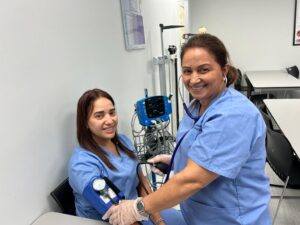
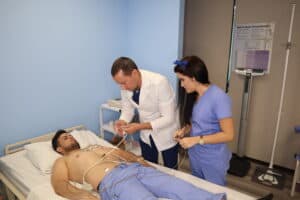
- Full clinical training: phlebotomy, EKGs, injections, patient exams, and vital signs
- Complete administrative training: scheduling, medical billing, coding, and office management
- 6-week externship where you work in a real clinic or doctor’s office
- Prepares you to test for national certifications right after graduation (NRCMA, NRCEKG, NRCPT)
- Career Services support available: our career services team connects you with local employers and helps with resumes and interviews
- Financial aid may be available to those who qualify
The program also comprehensively covers how to work with AI-assisted tools, telehealth platforms, and other modern technology you’ll see in today’s medical offices.
Does the Medical Assistant program sound like it might be right for you? Contact us to speak with an admissions advisor.